
✦ Plant Communications ✦
Tuning into the Plants can assist in wilderness first-aid situations or maybe aid you in jumping timelines...

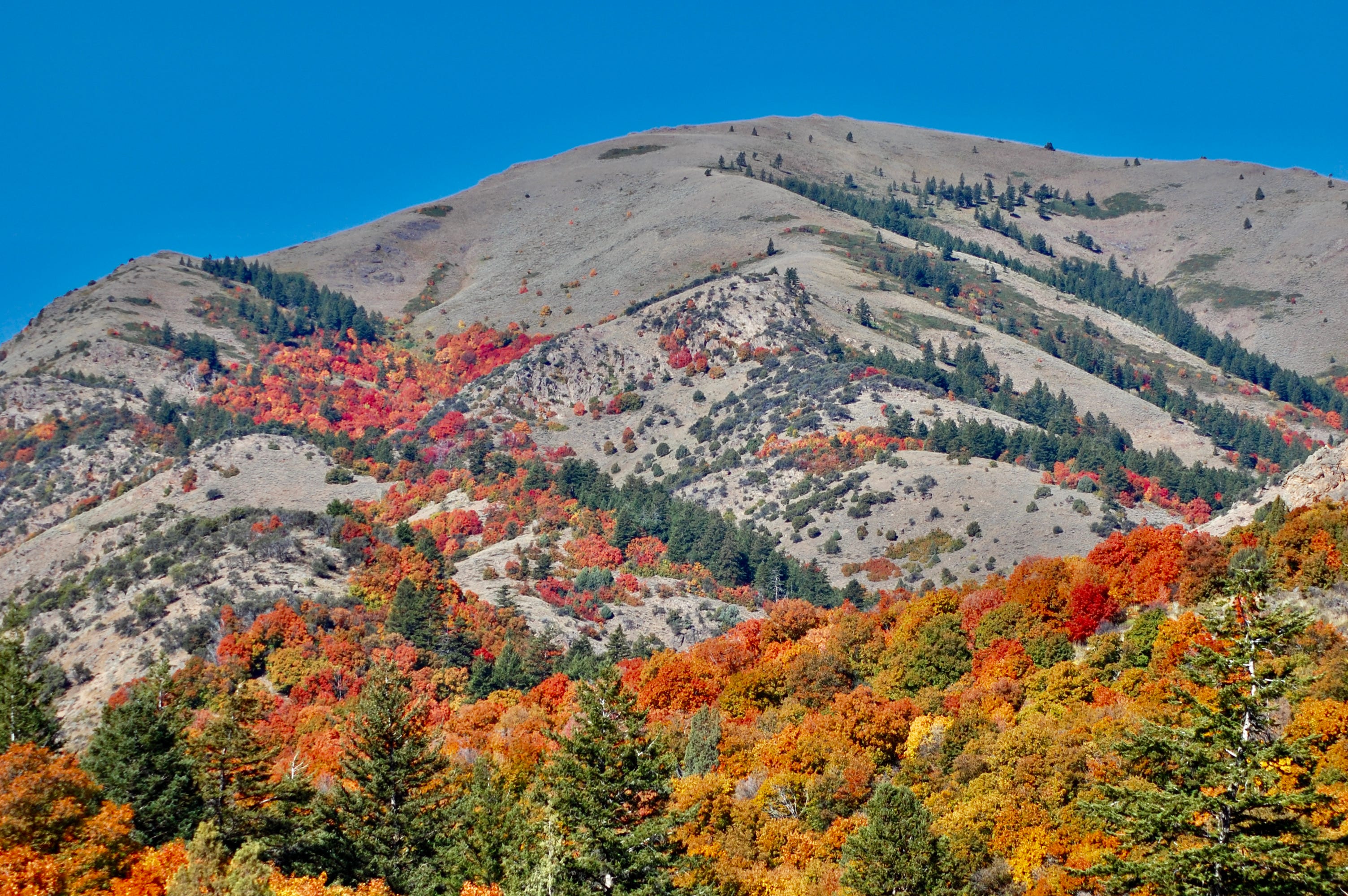
It was a warm Autumn day, and I was hiking in the Rockies with my pups. We had glorious views with Maples vibrant crimson and sunset orange, silver Sagebrush glowing, swaying grasses of gold and a blue-bird sky—a quiet Wednesday in the woods.
I came upon a HUGE black fuzzy spider, with long hairy legs, the largest I’d ever seen in these parts. It was the size of a deck of cards! It startled me so much I jumped, and then it jumped, and I jumped again! Fortunately, it scurried under a leaf and later I identified it as a Wolf spider. No photo on that one.
Shortly after, a sweet scent came on the breeze…what in the world is that? I noticed a shiny, waxy leaved shrub, a plant I had not noticed before…is it this? I took a leaf, tore it in half, and sure enough, that sweet smell intensified and the mystery was solved.
But it actually wasn’t, as I did not yet know the name of this aromatic being….
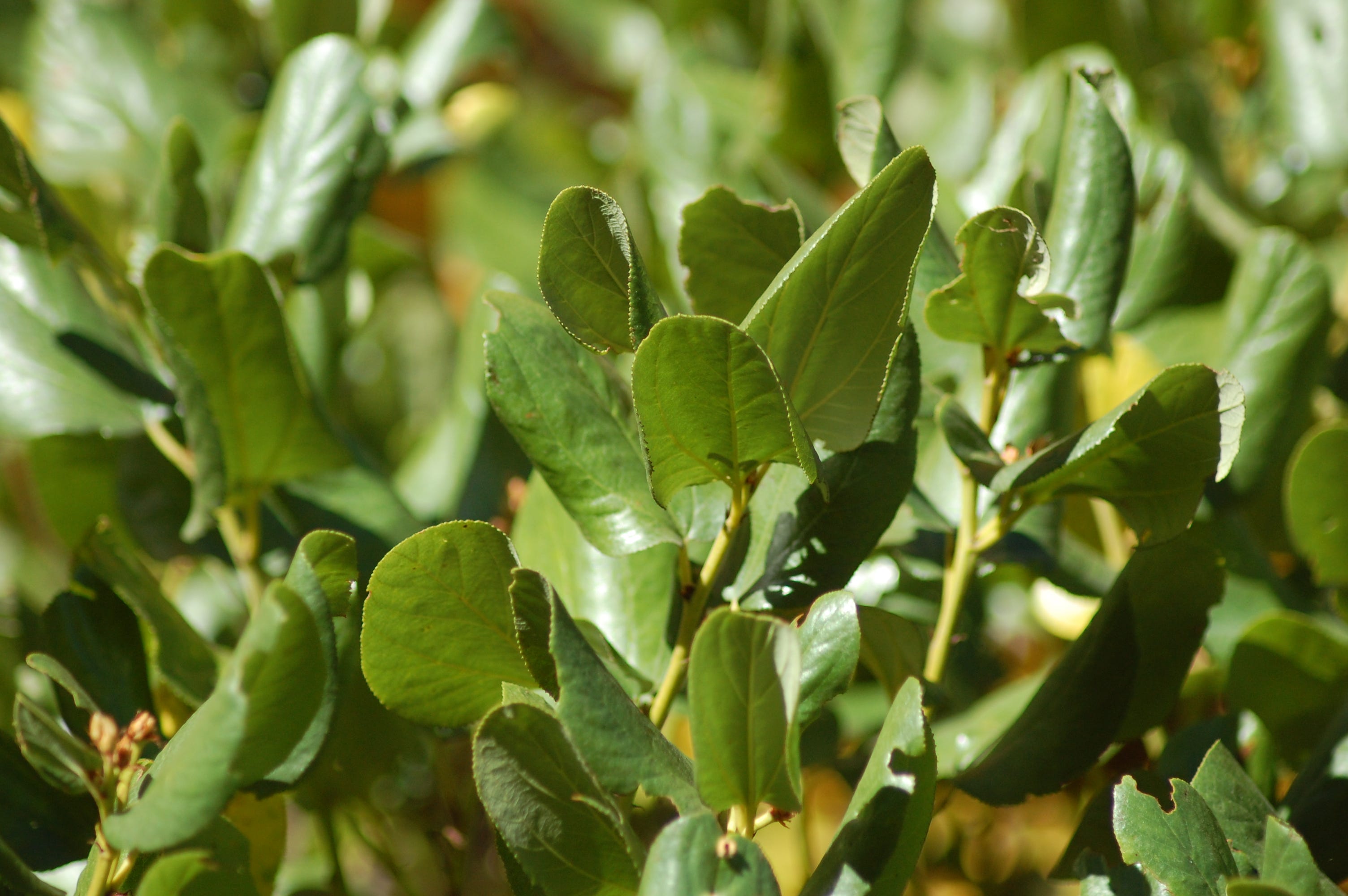
After arriving home, I looked in plant ID and regional herb books. It reminded me of a Bay leaf, and the scent was sort of similar, but as I didn’t find Bay Laurel in my search of native plants, and never had heard of it growing in these parts, so that didn’t fit. I knew I’d encountered something special, and trusted that eventually the answer would come.
Two weeks later, I went to those same mountains, this time with a friend. We took another, different route and halfway in, that sweet scent drifted by. I stopped and asked my friend, a local, Idaho-born gal, if she knew what this plant was.
She did not. And then she said, “I know you don’t like these, but I have a plant app…”
Curiosity was piqued and I told her to go for it.
The result: Snowbrush ceanothus, a species of Redroot.
Also known as: Snowbrush, Sticky Laurel(!), Buck Bush, Greasewood, Red root, Tobacco brush, Tobacco ceanothus. Latin name: Ceanothus velutinus
Now this is where the plant communication part comes in…
Just days prior I’d been going through a bin where I kept extra stock of dried herbs, roots and such--my daughter had requested Chai Tea and I didn’t have any made, so I was looking for those ingredients. In my gathering, I came across the tail-end of a bag of Red Root I had purchased from Mt. Rose Herbs back in 2020. My memory clearly recalls seeing that almost empty bag, the reddish hued root chunks, the words: Red Root. I had ordered it because of its usefulness during times of cold and flu and as 2020 had been, you’d understand why. I tucked the bag of Red Root back in and promptly didn’t think more of it.
But after I confirmed (through books and reputable online plant resources) that the plant app was indeed correct—ALWAYS double check, those plant apps are not 100%—that what I scented out was a species of Red Root, I went back to that bin of herbs to see if it was the same genus/species as what I’d purchased years before.
And I kid you not…the bag was not in there.
I searched three different times, thoroughly!! And nada…now make of that what you will. For me, this was an indication that the plants, this Red Root in particular, was communicating. God, aka the Universe was giving me a sign all along!
Or, I jumped a timeline. I don’t know, it was weird.
I ended up looking up the botanical name of the root (my purchase history was still available), and it was Ceanothus americanus. So, a related, but different plant, and they look different too. C. americanus is an eastern North American native shrub with many medicinal uses listed. I don’t think I’ll be harvesting this local Red Root any time soon (its roots are ridiculously hard and Rattlesnakes and big ass Spiders live in these parts), but I enjoy knowing that if needed, this plant could be helpful in some situations.
Much like the Oregon Grape Root experience, coincidentally, with the same friend I mentioned in this tale, back in October of 2021…
I’ve shared this story often as it is such a good representation of what can occur, in a really helpful manner, when we heed the communications of our Plant friends.
To recap, my friend and I were hiking in an area new to both of us. Her two big dogs were with and we went up a bit of a hill and entered a lovely ‘meadow’ full of Big Sagebrush, Oregon Grape Root and not whole lot of other visible plant life outside of the tree line, as it was late in the season and hard frosts had killed back much of the vegetation.
She was in the lead with myself following about five feet back. Suddenly she began swatting the air, and within seconds, began to yell in pain as wasps swarmed and started stinging her…I backed up, she ran forward, swinging her arms and screaming, “Ouch!!!” as she continued to get attacked. Ripping off her shirt she circled back towards me as I continued backing up the way we’d come. Soon the wasps were more interested in the bright fuchsia color of her long-sleeved apparel then her by that point.
But man, oh man, did she get it. The redness, the heat and the pain of those stings were getting worse and worse by the second. Fortunately, we were pretty close to the car, but still a good 20-minute, back-woods, gravel-road drive from her home.
I looked in my backpack where normally I carry the Bug Bite Salve I make…but I’d recently cleaned it out and since the bugs were no longer ‘out’ I’d stashed it away. I did have some lavender essential oil in water, homemade hand sanitizer (why I’d kept that ??) and Arinca montana homeopathic tablets. Homeopathic Arnica is good for bruising, swelling and pain (ever since my son was young, I’ve carried this with me in my purse or backpack). Giving her the max dose of 6 tablets and spraying the lavender spray onto her stings, I looked around the area.
No Yarrow, no Plantain…these are the first plants I look to for emergency use in the case of bug bites and stings. Also, no Alder or Quaking Aspen or even Cottonwood leaves as they had already dropped for the year.
What I did see in abundance was Oregon Grape Root (Mahonia repens).
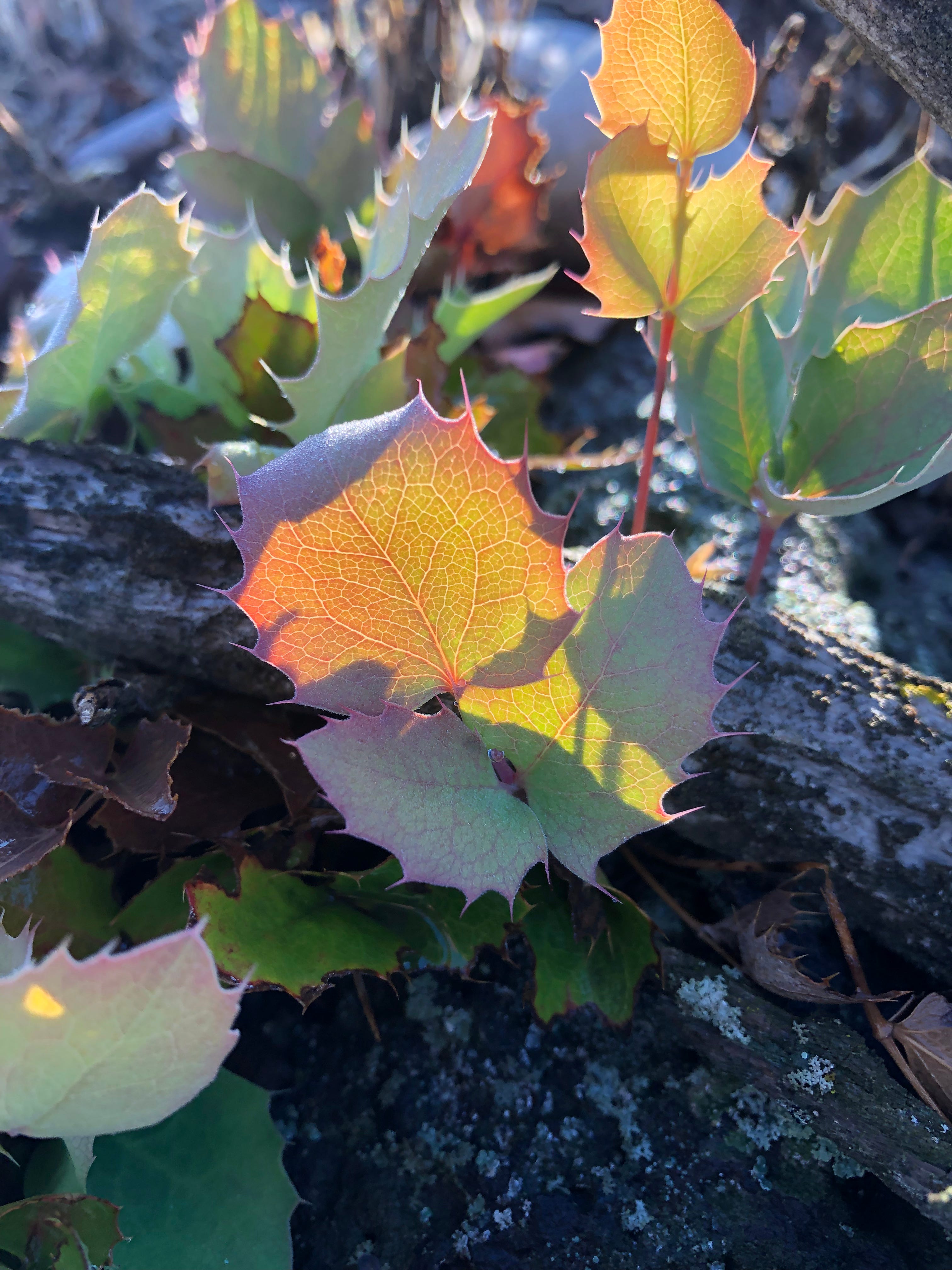
This was a plant that didn’t grow in SE Alaska, and thus, I wasn’t so familiar with it; but one I knew to be powerful. Not that long ago, I had harvested a wee bit of its root to tincture and experiment with. During that process I’d tasted a little and the astringency made my mouth pucker! With that information and after asking the plant to help my friend, I took the Hori Hori knife I carried, and dug up some of the brightly hued, yellow roots. We brought them down to the little stream to clean. We put the cold water on her inflamed skin, helping to calm her spirit after being attacked out of nowhere.
Another dose of Arnica for her when we got to the stream (please note, this is a homeopathic remedy, taking Arnica internally is not recommended unless you are absolutely sure of what you are doing--we’re talking about homeopathic Arnica here). I washed the Oregon Grape roots off while my friend used the cold stream water to put on her body. Using a knife to scrape off some of the outer bark, I cut it into smaller pieces and then gave her bits to chew on, thinking that its cleansing and astringent actions would be beneficial both internal and externally.
Then we applied the chewed-up root to her stings, all 15 of them…almost instantly she felt the cooling and astringent action on her tender tissues. We kept going until all her stings had Oregon Grape Root applied to them. The difference from when we arrived at the stream, with her body going full reactive mode, was incredible. The heat dissipated tremendously; the hardness and pain of the swelling stings decreased rapidly.
She was able to calm down and not go into shock.
It was an intense teaching moment for us both.
Never did get any photos of the before and after, as the situation required we both keep our heads and focus on the emergency at hand. Would she have been fine if we’d not done these interventions with the plants? Probably. But at the rate the swelling and pain was going, I don’t think it would have transpired nearly as easefully.
By the end of our time at the stream, she was ready to go on a different route and continue our hike, which we did. I gave her the remaining bit of roots to take home and use later that day. That experience drove home, yet again, the Power of Plants. Not only in their ability to help us through life challenges, but for the way they can communicate with us when we are paying attention and open to their messages.
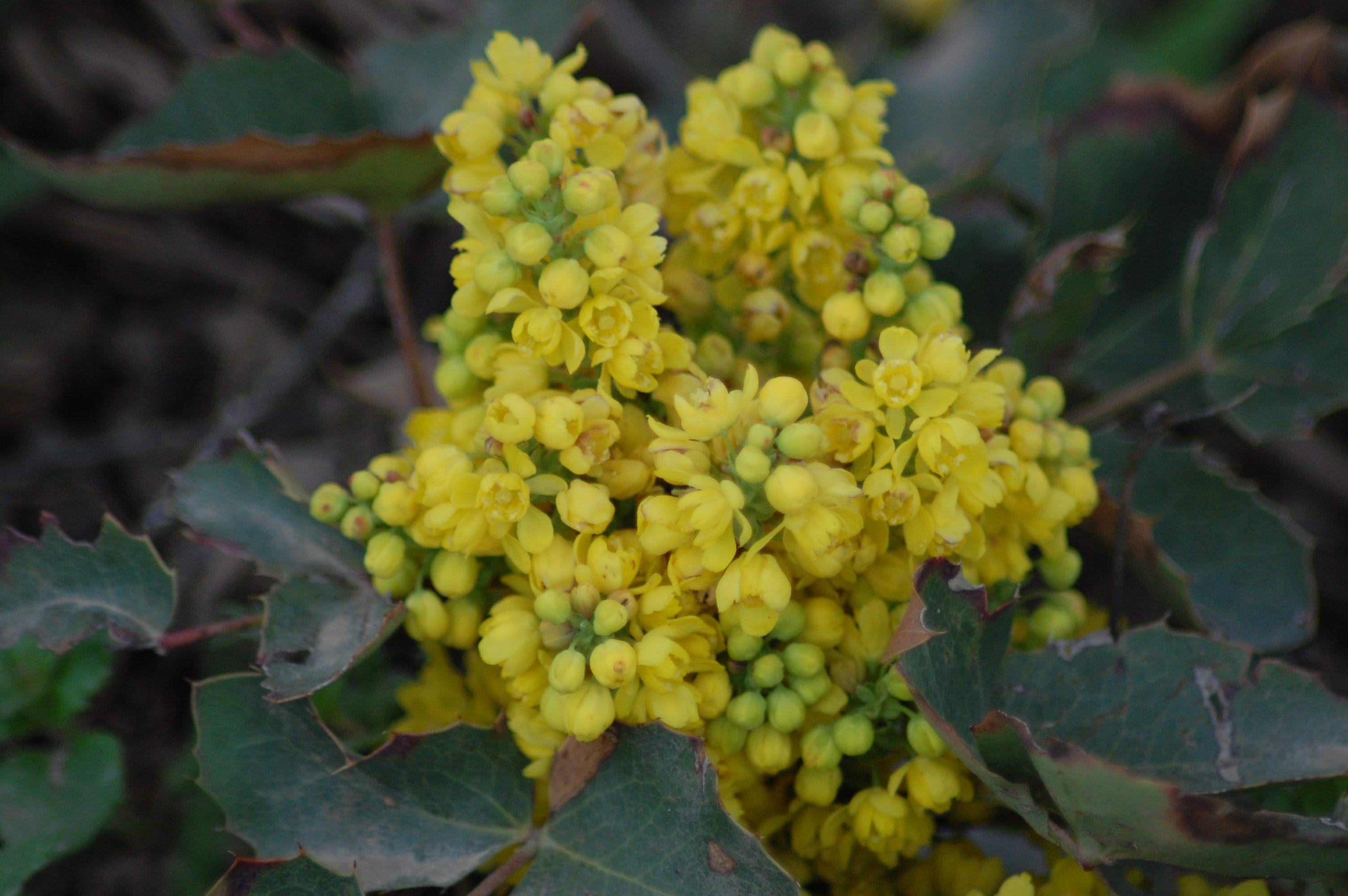
This is just a snippet of Plant Communications I’ve enjoyed here on this Earth….how about you? :)
Lots of times. put it in my herb book, so young people know what to expect. when i go to herbal events, i notice about 26% have encounters like this to talk about. But Kombucha are talkative, so that is what i ask about first.