
The devil made me do it.
Dedication: Oplopanax horridus aka Devil’s Club

All right. I’m not sure why that title is the one that wanted to come through, but come through with a flourish of typing fingers it did. Might change it later. But heck, you gotta be catchy in this day and age, so it’ll stay for now! [Actually, the reasoning comes through in the article…keep reading!]
I do have a confession to make before we get further, I had mentioned in the last couple of articles that I had made it into the rankings of Substack’s Home & Garden category — a few days back Archaic Joy was #43! Hooray! Well, upon further investigation, it was #43 in RISING…so like #143, because there’s another ranking of 1-100. BUT! As of this writing, I am #94 in the actual category of Home & Garden — so awesome! Thank you for reading, thank you for subscribing, and thank you so much for hitting the little heart button that tells me (& the algorithm that is Substack) that you liked what you read and I should keep sharing! Much appreciated :)
Now, without further ado….
✦ Dedication: Oplopanax horridus aka Devil’s Club ✦
It was 2001 when we first met. I was visiting Alaska, road-tripping west through the US, north into Canada and finally landing at the destination: Skagway. My co-pilot, a man who had stopped taking his anti-anxiety/depression medication when we had left Wisconsin. I was unaware of this part of his story. We had college friends in common, but were mere acquaintances really. For the most part he was a decent fellow.
Until he tipped over the canoe in the middle of a cold Montana lake…
But he’s not the story, although he is an integral part of how I first got to meeting Devil’s Club—I may not have traveled northward that year if he hadn’t pitched in for half the gas!
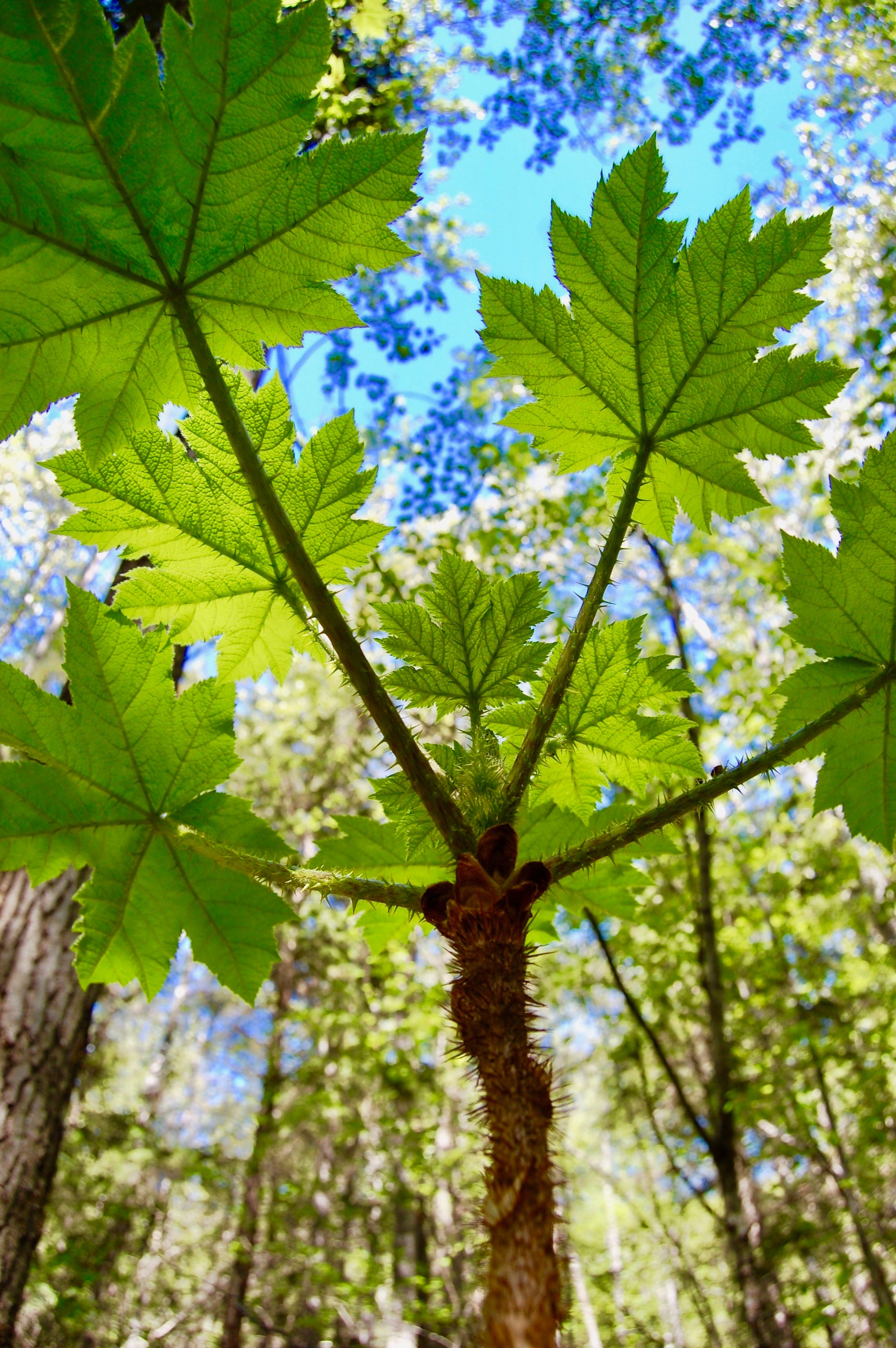
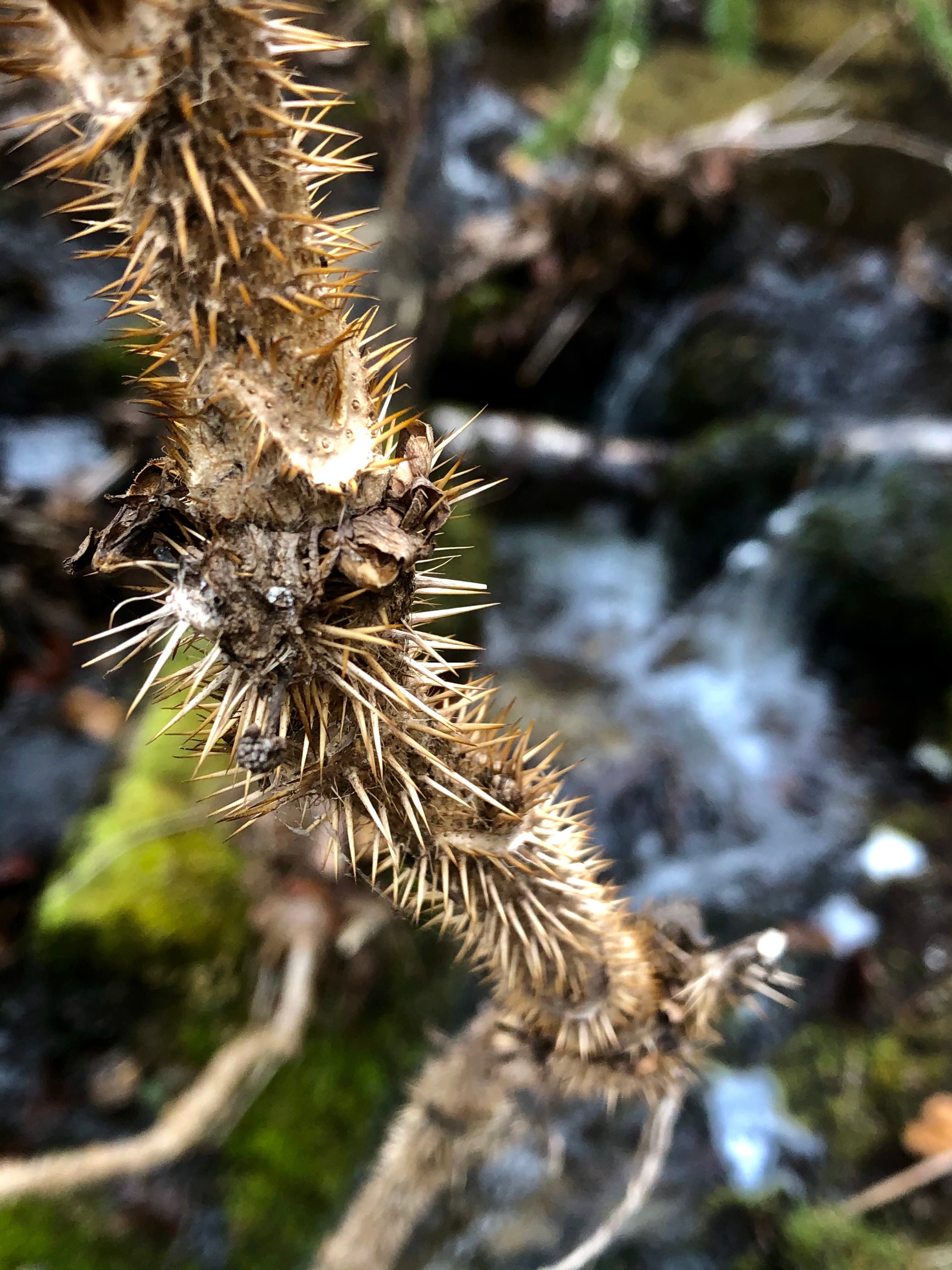
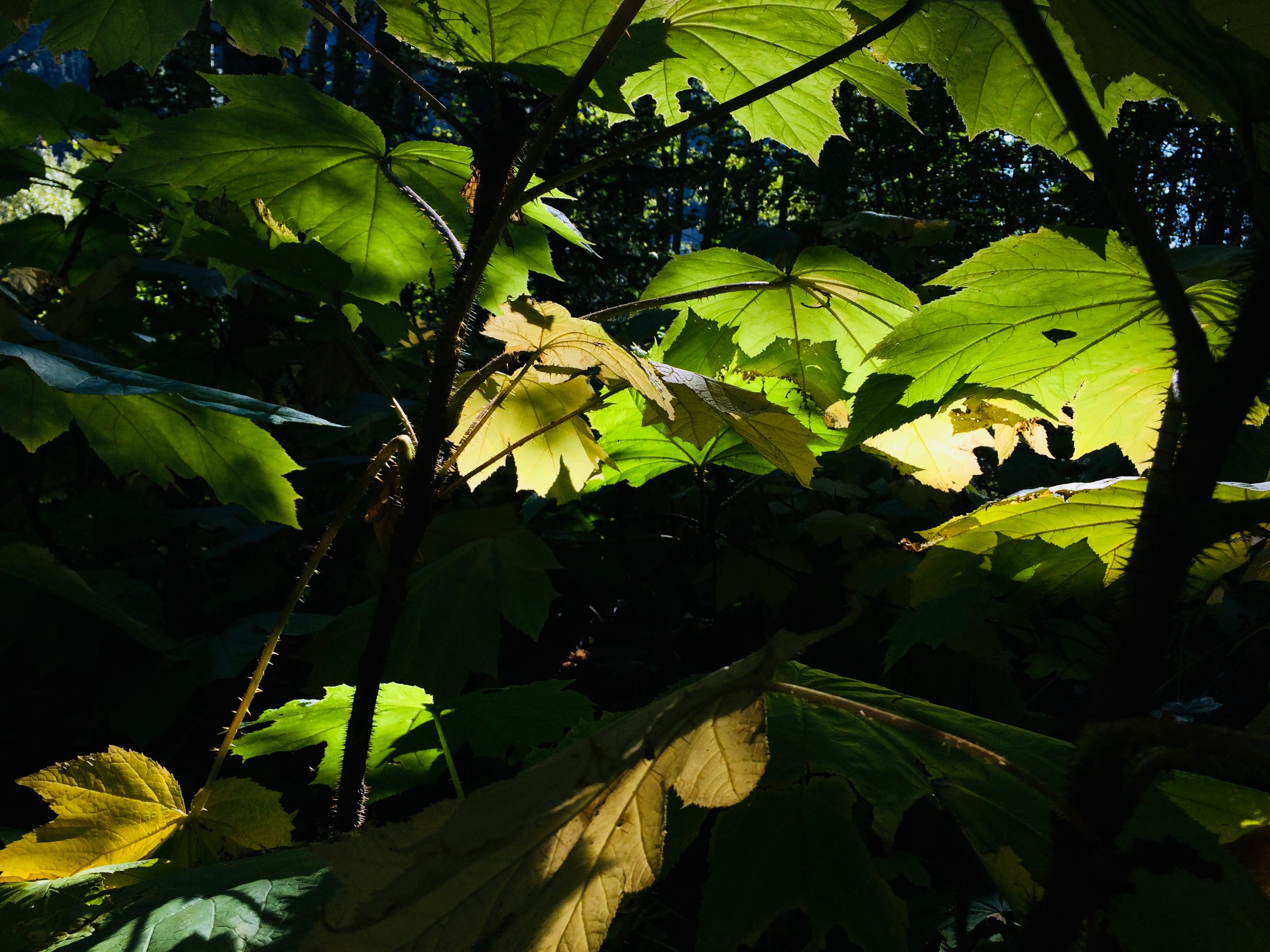
Devil’s Club is a Plant of thorny nature and high repute. Or a hated foe, if tangled with. Half-inch to inch long thorns run up and down the woody stem of Devil’s Club. If accidentally grabbed or stumbled into, several hours with a tweezers are indicated. It is a woody perennial in the Pacific North West, parts of central Canada and Upper Michigan, especially further north where there are more wild lands for it to freely roam. The large Maple shaped leaves are also spiny, underneath are little teeth-like thorns that deter all but the bravest munching critters.
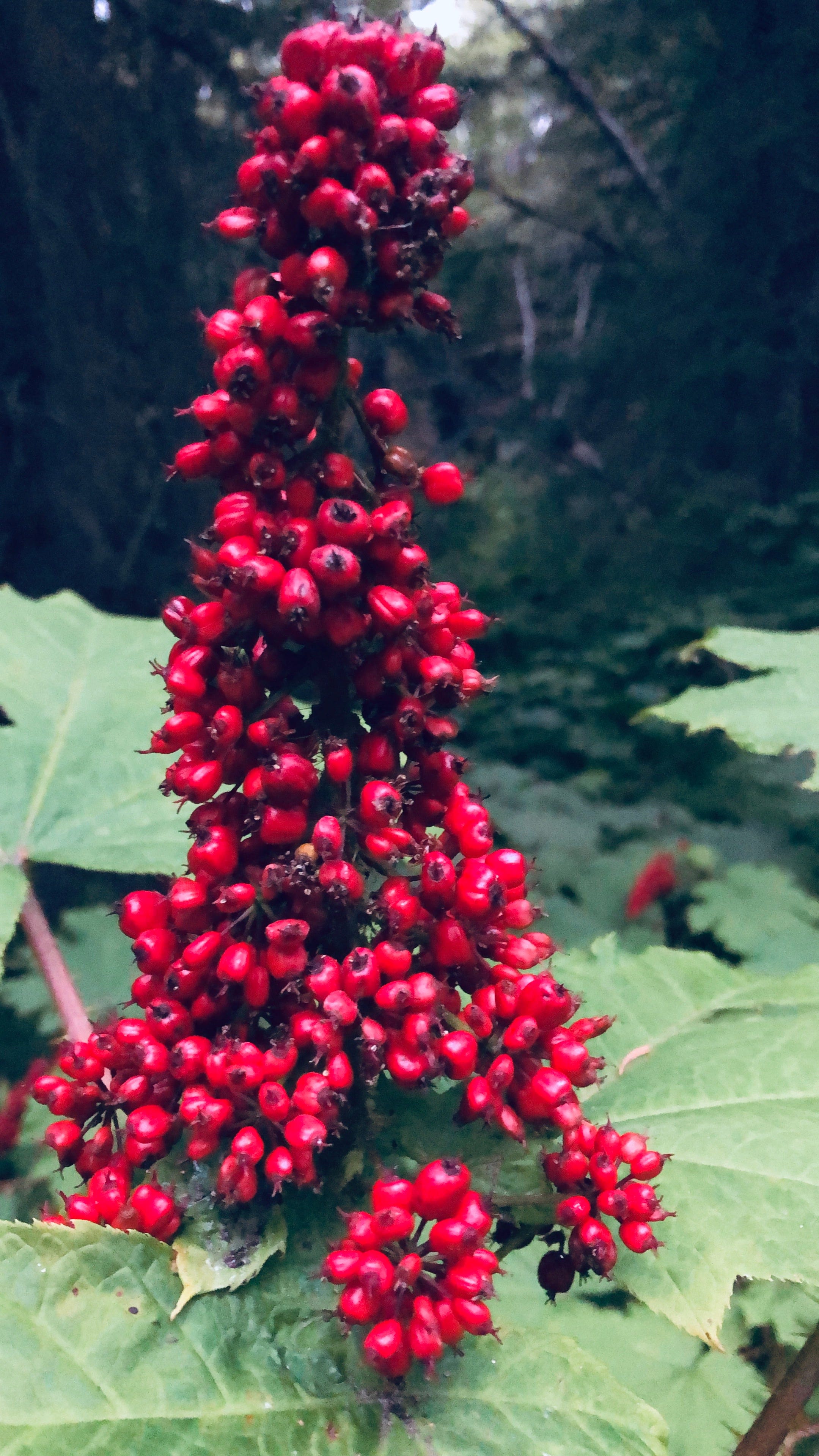
The Natives of the land revered this Plant. As medicine, as spiritual ally, as a powerful ally in an oftentimes inhospitable landscape. The Bears will eat the berries and sometimes you’ll read that Bears will roll in the roots following a wounding tussle.
Well, we safely arrived in Alaska after 5 days on the road. But I was pretty much done with being around the fellow I had just spent 3 very fraught days with. I needed some alone time, some Nature time. The friend whom we were visiting told me of a very spiny Plant that should be avoided at all costs, it was akin to Poison Ivy he told me. Okay, got it. I followed the tracks down to the Lower Lake trailhead and headed up.
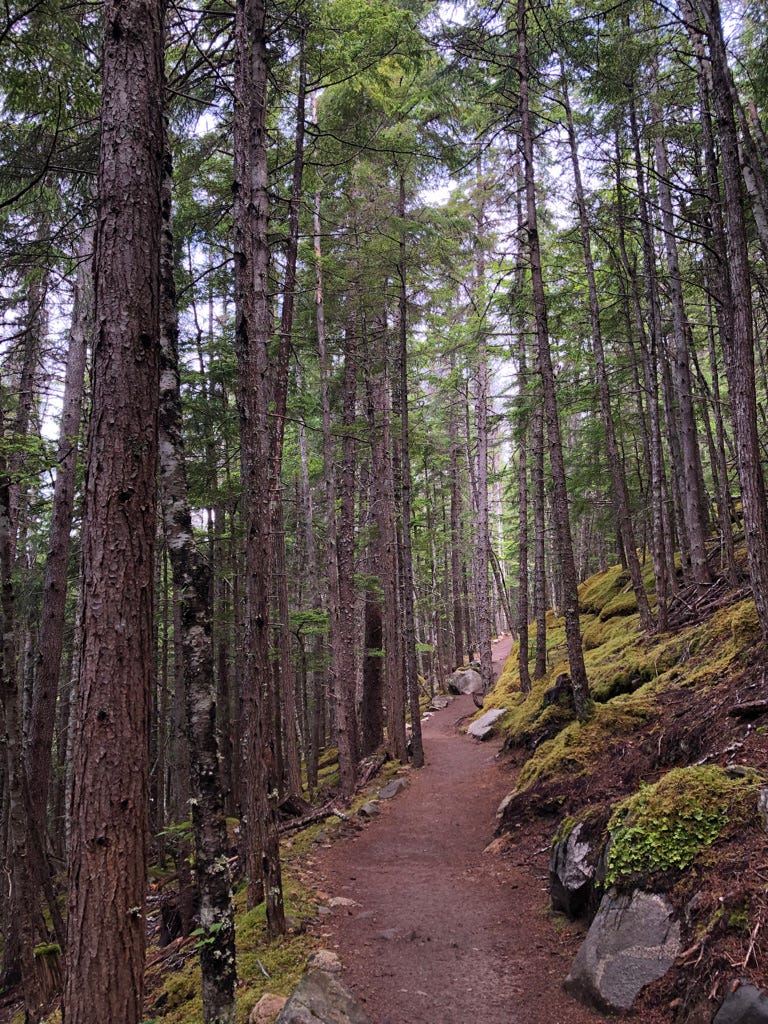
And I fell in love. With the Birch trees, the Lichen covered boulders, the carpet of Moss inviting you to come closer…little streams, clear and cold, tall Spruces and Cottonwoods. I was enchanted.
After circling the lake, I ended up on the North end on a small little trail that began to peter out. And all of sudden I realized I was entirely surrounded by the thorny one. Devil’s Club. Named as such because it can keep the Devil at bay. And since I thought you couldn’t touch it at all it’s like Poison Ivy he said…I began to contort my body around, under and over as I slowly and carefully moved through a dreadfully large patch of Oplopanax.
“The genus name, Oplopanax, is derived from hoplon, meaning weapon and panakos meaning panacea or “all-heal”—referring to the medicinal qualities of these shrubs…”. http://nativeplantspnw.com/devils-club-oplopanax-horridus/
Nowadays, that area is quite easily traversed, but back then that offshoot trail was not well-traveled. Eventually, I made it down the trail with a harrowing escape tale to tell my friends back at the campfire.
The following year, in 2002, I made my way via train and ferry to live and work in Skagway for the summer. It was there that my love of Plants blossomed further, working at Jewell Gardens, an organic show garden, and enjoying the extensive trail systems near town. It was there where, yet again, Devil’s Club came to my attention.
It was Devil’s Club who brought me out of my shell as an herbalist.
I began reading more about plant medicine and how to sustainably harvest and what times of the season were appropriate for what part of the plant. Having grown up around gardens and plants all my life, learning more about this felt like second nature.
During the winter months of 2005-07 I experimented with using the dried inner bark of Devil’s Club in salves, decoctions and tinctures. I undertook an online studies course with the American College of Healthcare Sciences, leading to a Certificate of Herbal Studies. I read countless books about plants, photographed to my hearts content, and learned how to seed, grow, weed and tend while working at Jewell Gardens and within my own personal gardens…
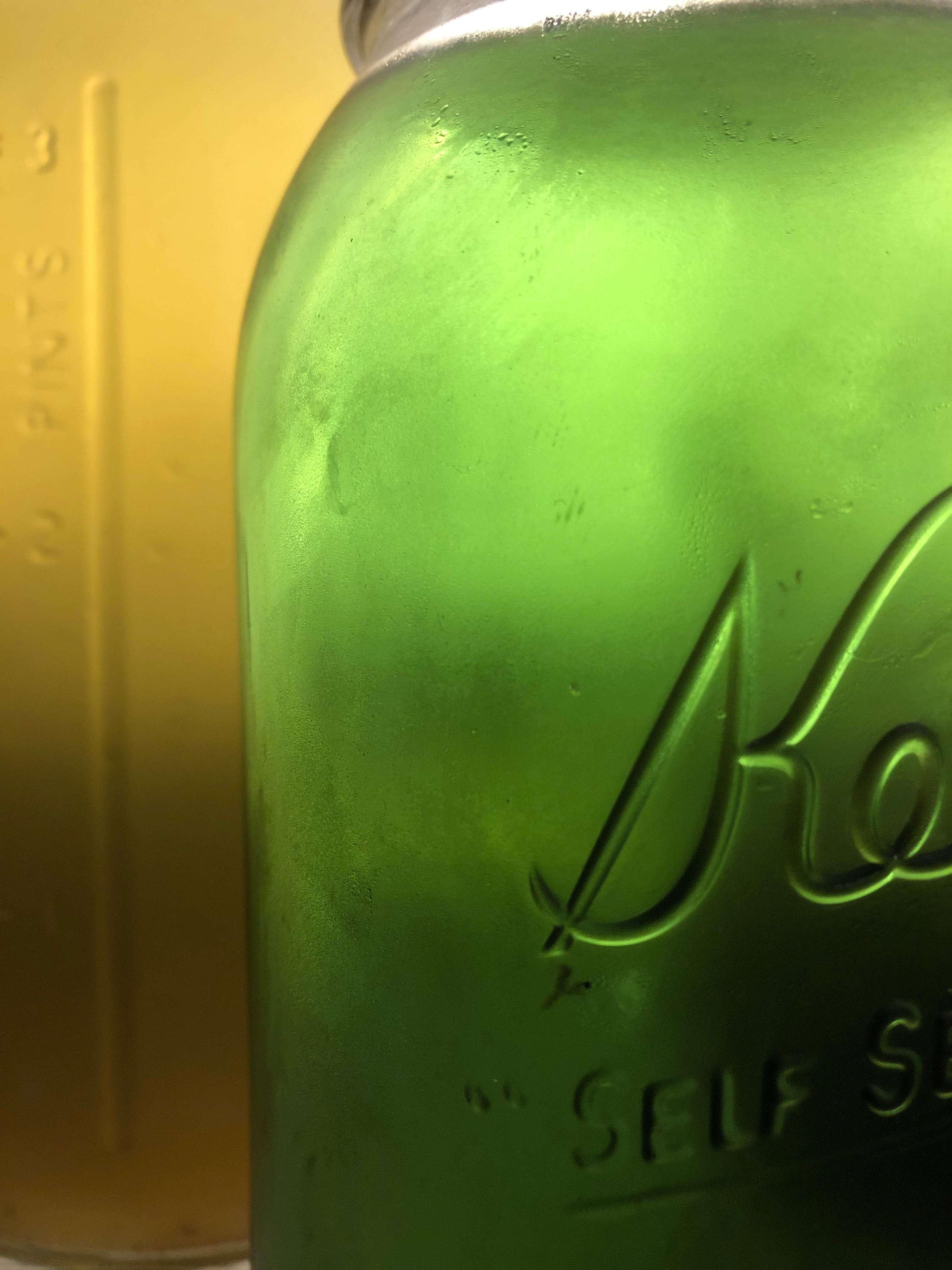
There in the Log House, a potent combination of Wormwood, Yarrow, Devil’s Club and a wee bit of Usnea transpired, and thus became my Devil’s Club Salve. I gave some to friends, to those who asked and slowly but surely, my reputation as an herbalist and gardener grew.
After my son was born in 2008, I slowed down work at Jewell and began my work as a mother. In 2010 I started Maiden Alaska Herbals, the business name before Archaic Joy. By that point, I was living in a stable place where I had a small garden that grew plenty of Calendula, Mint, Comfrey, Raspberry leaf and many other medicinal helpers.
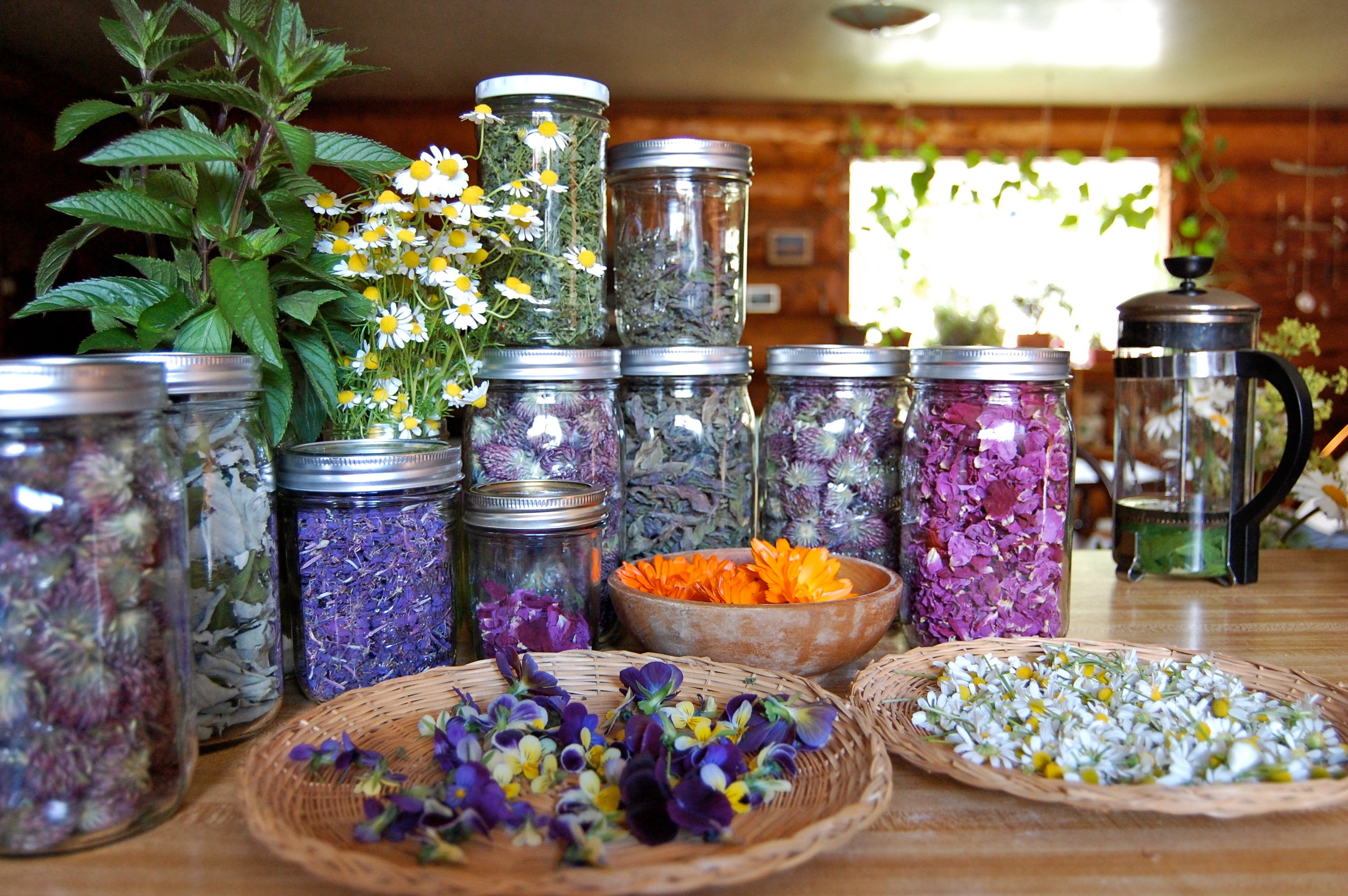
I co-founded the Garden City Market, a ‘farmers’ market that was really more of an artisan market, and sold my salves and teas and occasionally tinctures directly. Soon I was wholesaling to locally owned shops in town and as the word spread of the efficacy of my product, so sales grew. This salve helped numerous ailments such as wounds, pain, dry skin, eczema and psoriasis. I have literally hundreds of emails over the years from people who were aided by this formula. Some brought me to tears with their kind words…
Every year though, I went to the forest, sat with a patch of Devil’s Club, and asked for permission. That was always the deal: if the Plant ever said no, I had to listen.
Around 2016, I had been getting some niggling feelings that my business was growing too quickly (as the Devil’s Club Salve was my primary seller) as a local business had put in on Amazon, and sales began to climb at a feverish pitch.
It didn’t feel right.
The magic of the Plant, the medicine, was diluted by distance and commerce. I didn’t want to see Devil’s Club go the way of Chaga, becoming over-harvested due to humanity’s need. After a year on Amazon, I asked the seller to remove my salve from that platform and kept it available to local shops, the Garden City Market and via my personal website only.
But even those sales were getting super high; I had begun to question the vast tourism that was ramping up during the 2010’s in Skagway. More and more people were visiting, there was no cap on the limit of visitors and my salve was selling like hotcakes. And I wondered if this was how I wanted to continue.
In early February of 2019 I was walking back from visiting some giant Cottonwood friends and paused at a nice expanse of Devil’s Club that I had known for some time. I decided to ask permission to harvest (not that I would at that time of year, far too early), and received a resounding No.
And I listened.
That year, I went back to Jewell Gardens in order to reach more folks via Plant Education (tours + beauty + plant medicine + knowledge). (Alas, that took a turn when 2020 hit and Jewell Gardens is no more.)
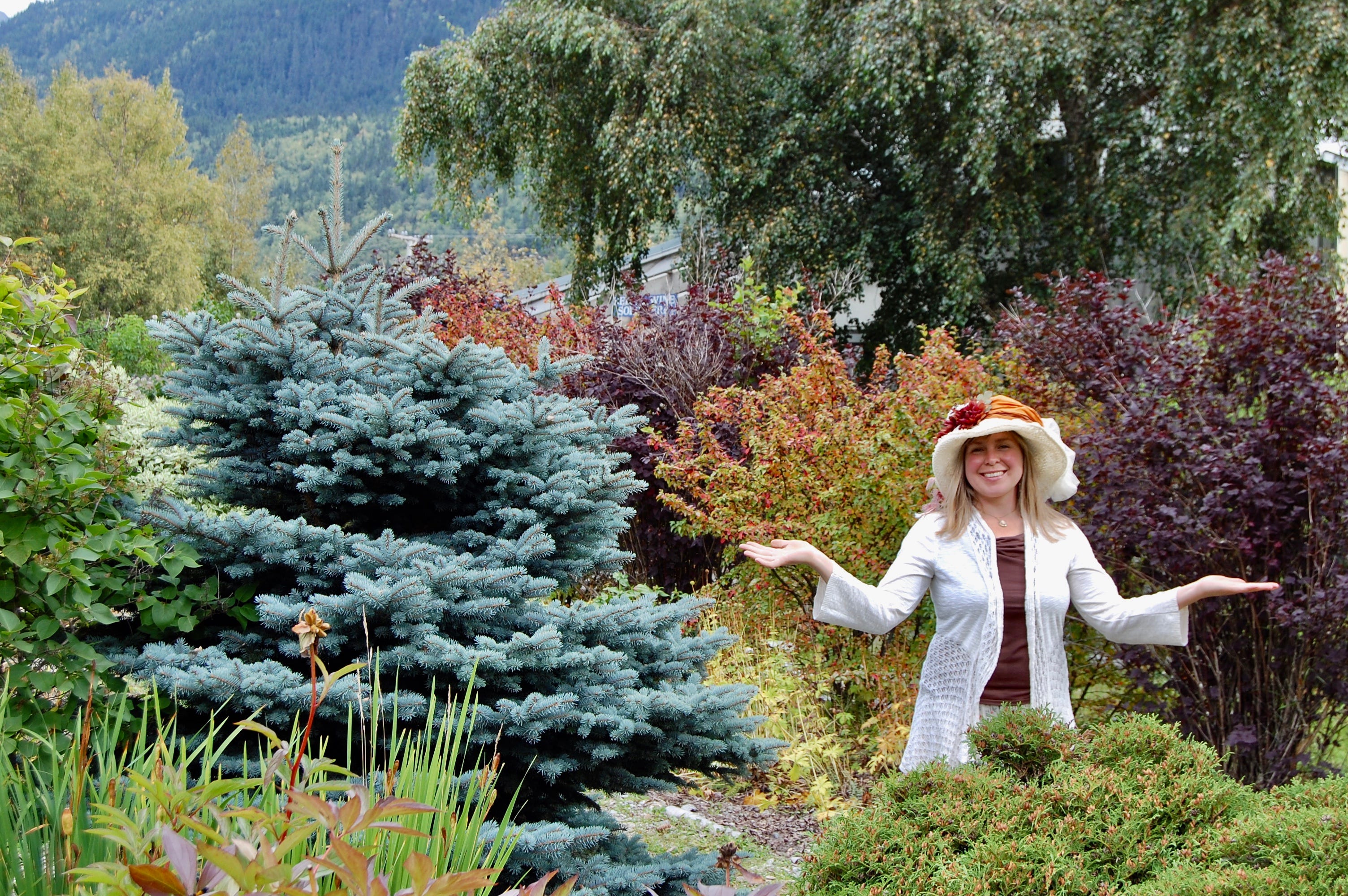
There is controversy amongst some folks regarding the use and sale of medicinal wild plants. And that controversy is warranted to a point…and it’s why I never allowed Maiden Alaska Herbals to grow unchecked. It was never done to be exploitative. I made products to help folks and was mindful about harvesting with intent, care and love toward the area, toward Nature, towards Oplopanax itself. And when Devil’s Club said No, I listened, even though my ego, and my business was affected. There’s much more to write about this aspect, but this dedication is getting long as it is!
Oplopanax was paramount in my growth as a person, my growth in the wilderness of Alaska. I’ve tried growing it here to little avail. It’s just too hot. Devil’s Club likes the cool, moist and mossy conditions of the coastal regions especially. I did see it growing up in northern Idaho once upon a time, but I now reside far from its virtues. It used to literally grow in my backyard…
Every Spring in Alaska, I’d reverently pinch off a few budding leaf shoots and eat them fresh. They had a zing to them akin to no other Plant I know. One year I noticed a lone patch on the side of a commonly used trail…all of its buds were gone. Someone/s, who was ill-equipped to be wild-harvesting, had taken all of that year’s energy gathering ability away from that Plant…entirely inappropriate.
In another essay, Integrity, I share about an encounter had in 2020 whereby I was accused of killing Devil’s Club by utilizing it the way I did. This was untrue, but it led to some important self-reflections.
I once heard a woman proudly describe her green cupcakes made from Devil’s Club buds during a B.O.W. (Becoming an Outdoor Woman) class I co-taught in Juneau. Frankly, you’d need a lot of buds in order to make them green…
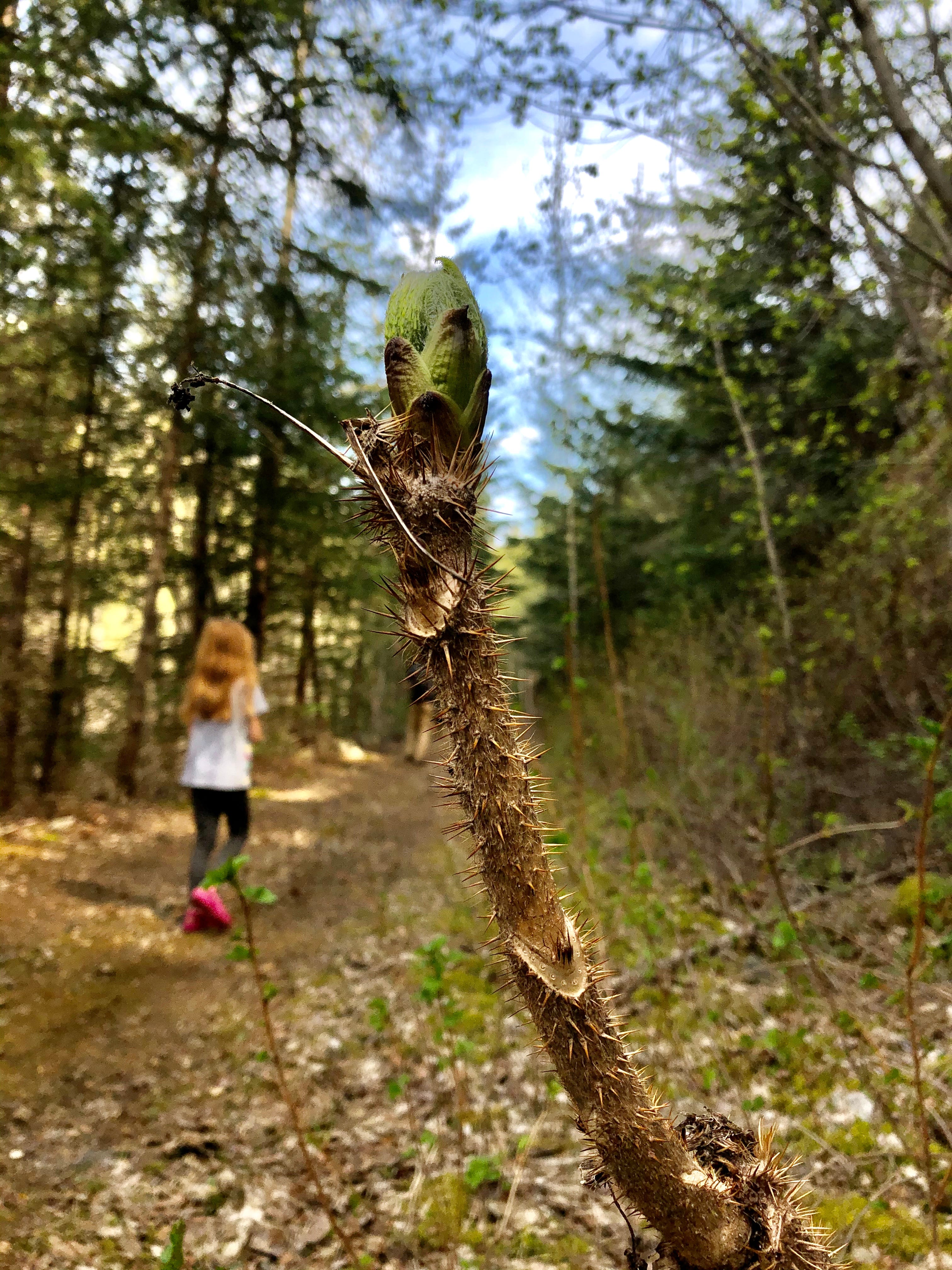
To me, that’s not a respectful use of that Plant…and I had to be careful how I phrased my response. Oplopanax is a sacred being. One long used by the Native peoples in the area (I dare not list for fear of not naming them ALL!). The indigenous peoples of the PNW all used this Plant for common ailments like respiratory distress, infected wounds, gastrointestinal issues, fevers, pains, arthritis and diabetes. They also used it for spiritual concerns, and the shamans of these tribes used Devil’s Club in their own magical, wondrous ways.
Devil’s Club is a spicy and aromatic herb that has a stimulating action on the lungs and respiratory tract. It’s a useful remedy for congested, cold, and damp conditions in the body caused by stagnation. It can move stuck energy, both physically and spiritually. Simply sitting with this Plant can do wonders for your mental health!
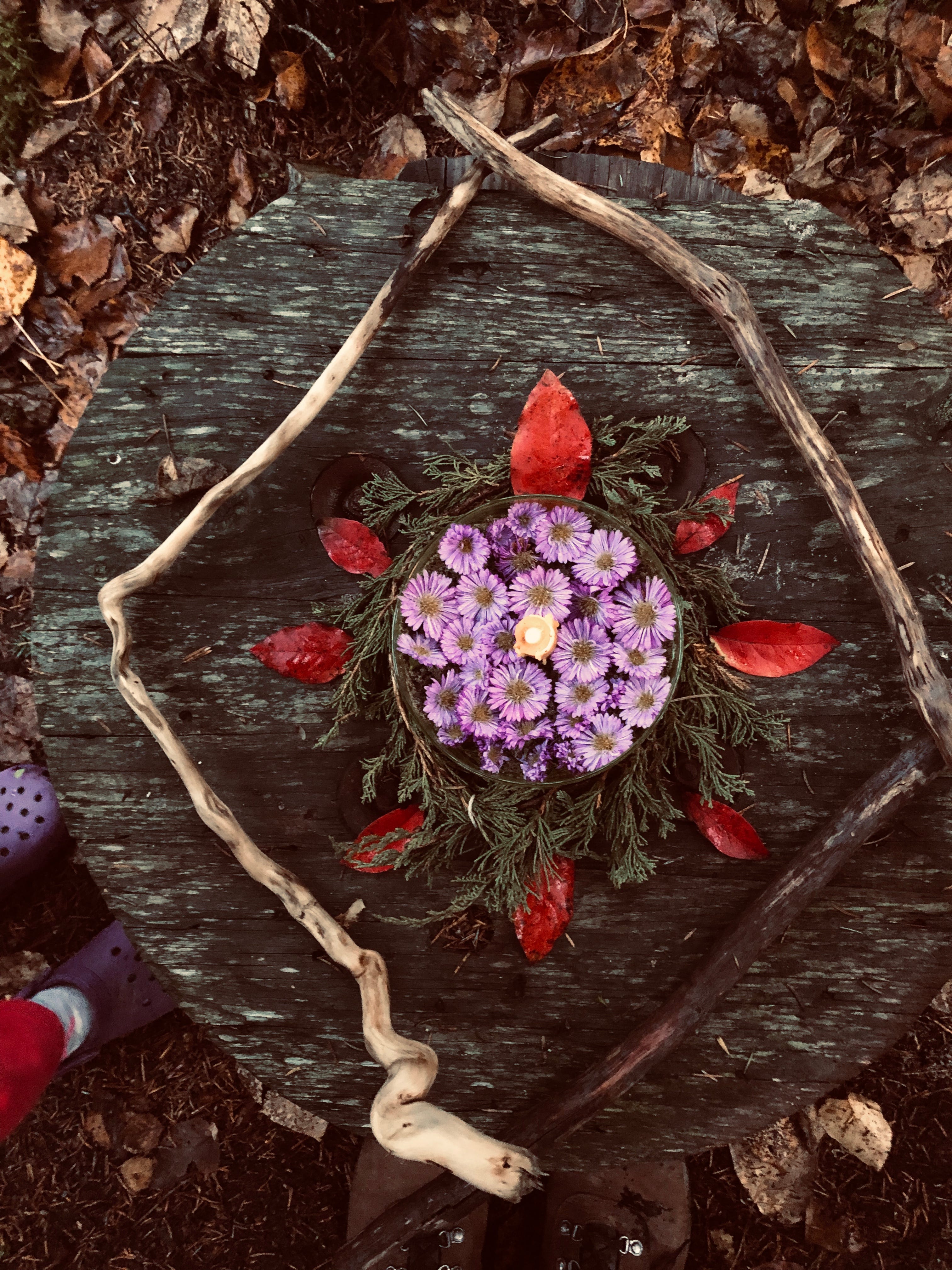
I dearly miss living near Oplopanax. We had a nice patch at the base of our property when we lived in Alaska. And I transplanted chunks from rescue-harvests around the perimeter, creating energetic and actual physical protection. (Roses, Stinging Nettle & Blackberries also work well for this purpose). Finding Devil’s Club driftwood pieces on the shoreline was always nice, I put these pieces over the doorways of my home to help ward off evil spirits or used them seasonal nature altars like the one pictured below…(seriously, did not coordinate with my daughter on the color scheme, that was a magical occurrence!)
When we first moved to Idaho, an area heavily infused with the Church of Latter Day Saints (LDS/Mormon) religion, it was a challenge to describe what I had been doing in Alaska when those asked what I did…”Why yes, I used to make a wonderful healing salve out of Devil’s Club…But it’s not that the Plant is evil, it’s that it can be carefully used to keep away the negative spirits, to ‘club away the Devil’!”
At once a formidable foe and a powerful healing ally, Devil’s Club is a Plant to remember. I’ve long ago used up the last of my 2021 Spring harvested, inner bark of the stem tincture…it was the best tincture I’d ever made, that last harvest. That tincture helped me to begin writing again. To start sharing anew this love of Plants. This glorious relationship that has supported me so much over the years…I’m so grateful.
So, in a way, yes the Devil (Devil’s Club) that is, made me do it. To write, to share my love of Plants, to help connect other people to the Plants…to protect, to love, to tend…yes, the Devil’s Club helped me immensely…
I’ve found that when making a tincture of Oplopanax, the inner bark of the stem, harvested in the Spring when the buds are just barely breaking dormancy to just before unfurling, is the best for invigoration, cleansing and spirit boosting medicine. For grounding, steadiness and long-term goals, use the inner bark of the root in Autumn after the leaves yellow and before the frosts come too heavy. Use a good vodka so the flavor of Devil’s Club comes through. I would use the folk (simplers) method, filling a small jar almost to the top with the inner bark of stem or root and then topping off with alcohol. Infuse 6-8 weeks and strain. Going longer decreases the good flavor in my opinion. This same time period, early Spring and late Autumn is the time to harvest the inner-bark of the stem or recumbent roots. Make sure you are practicing ethical harvesting techniques and always give appropriate gratitude to the Plants and Nature surrounding.
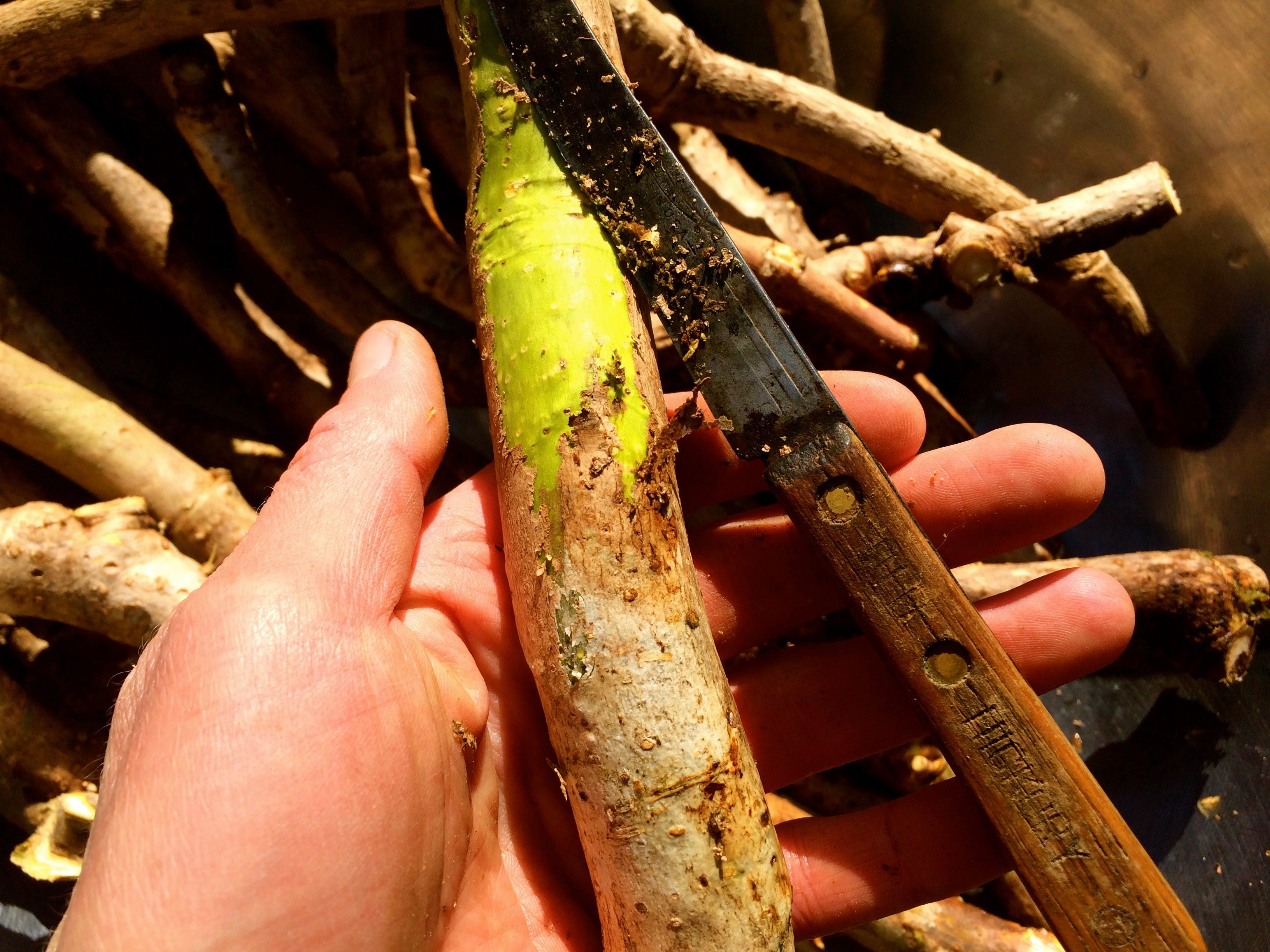
Thank you Oplopanax. You changed my life. In more ways than one. Blessings to you.
Of note, you can touch it—hopefully that’s become clear as you’ve read through. It’s not going to give you a rash like Poison Ivy can — no, you just have to be super careful not to get the thorns stuck in your skin. However, the resin is quite strong and some folks have reactions to it, so be cautious! I never needed gloves while handling, though some friends did.
Blooms & Blessings,
~ Emily
PS: I should mention, that fellow who’d stopped his meds, and who also nearly drove us into a lake in the middle of the wilderness in British Colombia on our way back home… Well, years later I saw him again while in town for a bachelorette party. Turns out he’d gotten his sh*t together and thanked me profusely for not leaving him in the middle of said wilderness like I’d really wanted to. We had a good little reminisce, and all’s well that end’s well…
♡♡♡