
✦ Lady’s Mantle ✦
Why you should fall in love with Alchemilla, and grow her in your garden...

First off, hi! Now that work at the greenhouse and planting season has mellowed, I finally have the bandwidth to write and share more about the plants again :). And, good timing, as Substack recently re-worked it’s subject headers and I was able to list this newsletter under Home & Garden — whereas of this morning, I was 89th out of 100! Pretty neat! I’d love to get higher on that list & more exposure + more subscribers, would be helpful! So if you liked this post — or liked some other particular piece I’ve written, please hit that heart button at the end (that helps more plant lovers see it based on the algorithm of Substack). Another awesome way to share is: copy the link and post it on your social media, or simply tell your friends to subscribe :) I’d really appreciate it!
The following article about Lady’s Mantle first appeared in Haven Making: Using Plant Medicine to Create Sanctuary. I’ve revamped it with lots of new info because I am absolutely floored by how amazing this plant is. As always, any photos are taken by yours truly unless otherwise indicated. And no AI is utilized in any of my writing, ever.
And as always, this is not medical advice.
So, without further ado…here we go!
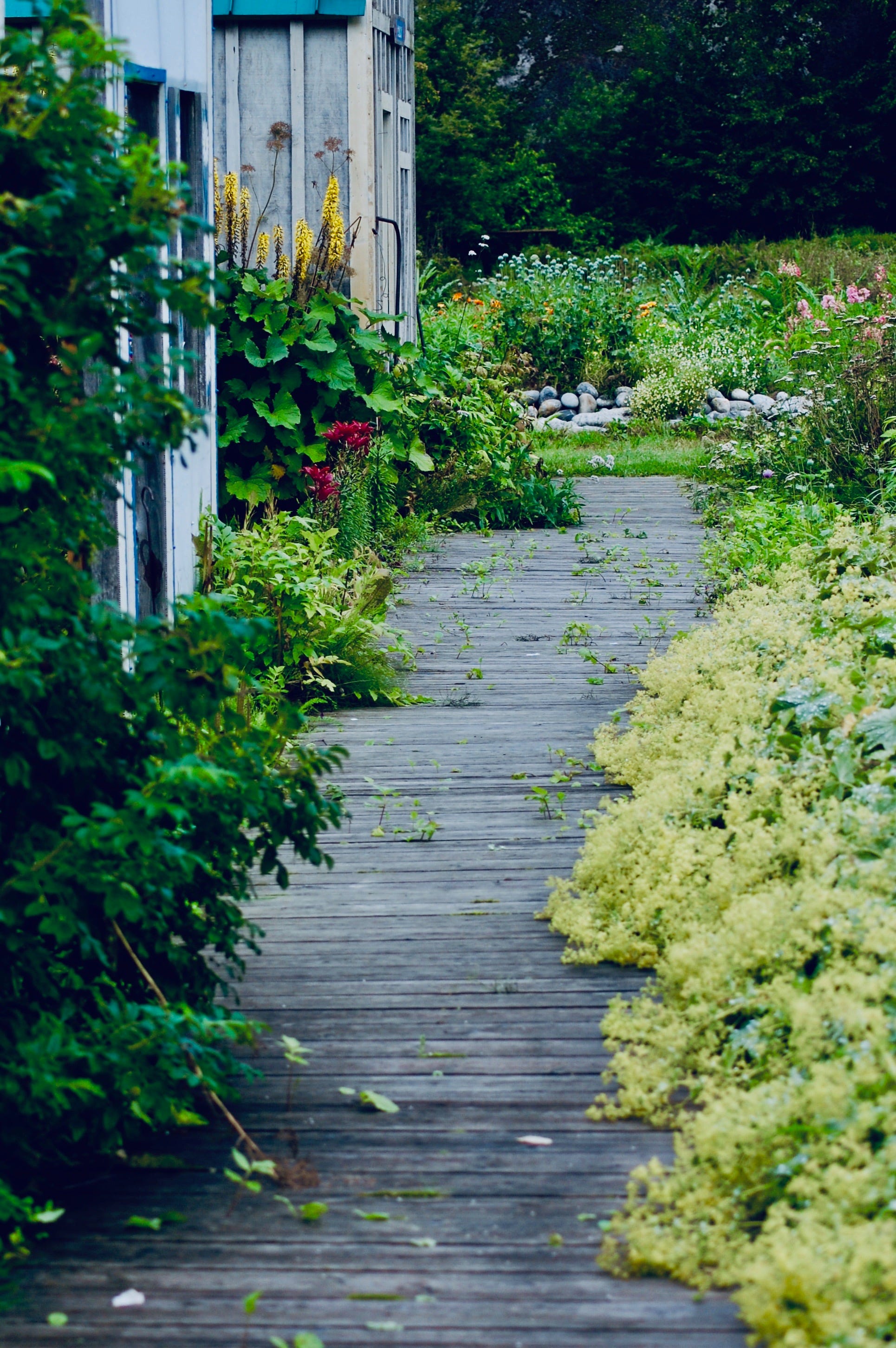
Lady’s Mantle and I first met at Jewell Gardens way back in 2002. She’d already been planted along the edge of the boardwalk in “Paradise Alley”—once a real place in Skagway, Alaska where ladies of the night made their living. At Jewell Gardens Paradise Alley, the eccentric artist owner Charlotte, planted red Geraniums for the “red-light district.” She also seeded Nasturtiums into antique bed frames, creating “Nasty beds” which were in the little houses, or cribs.
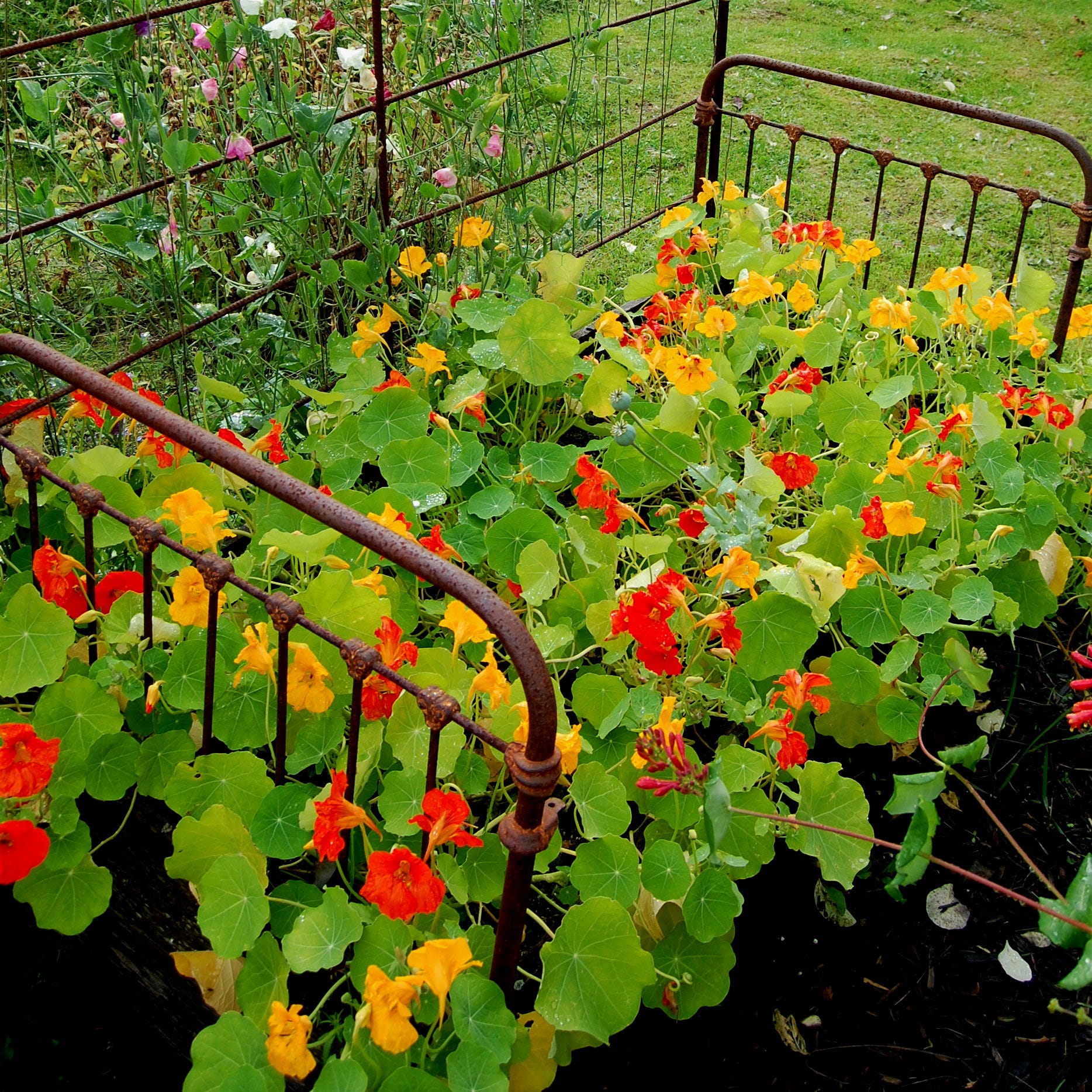
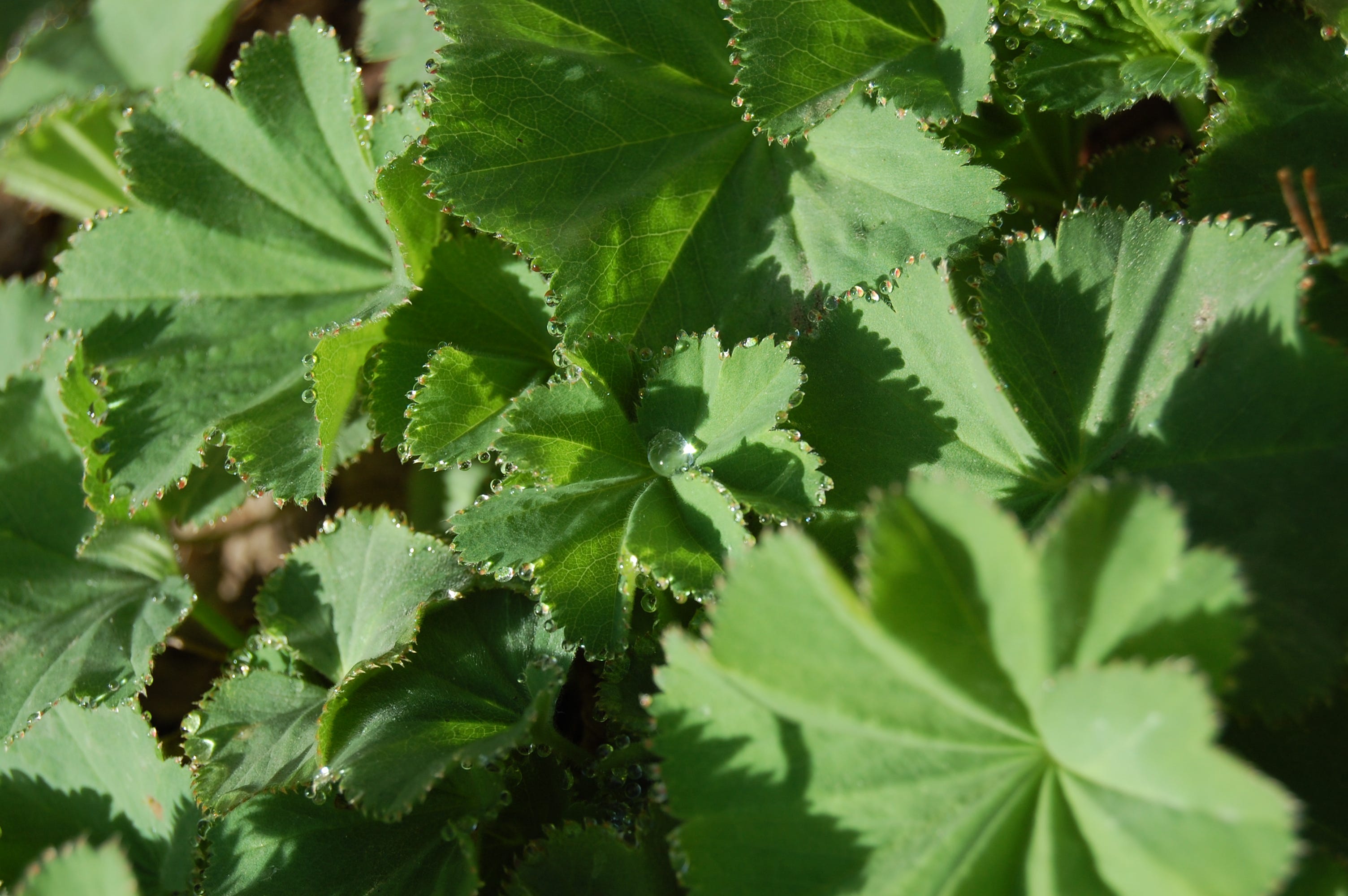
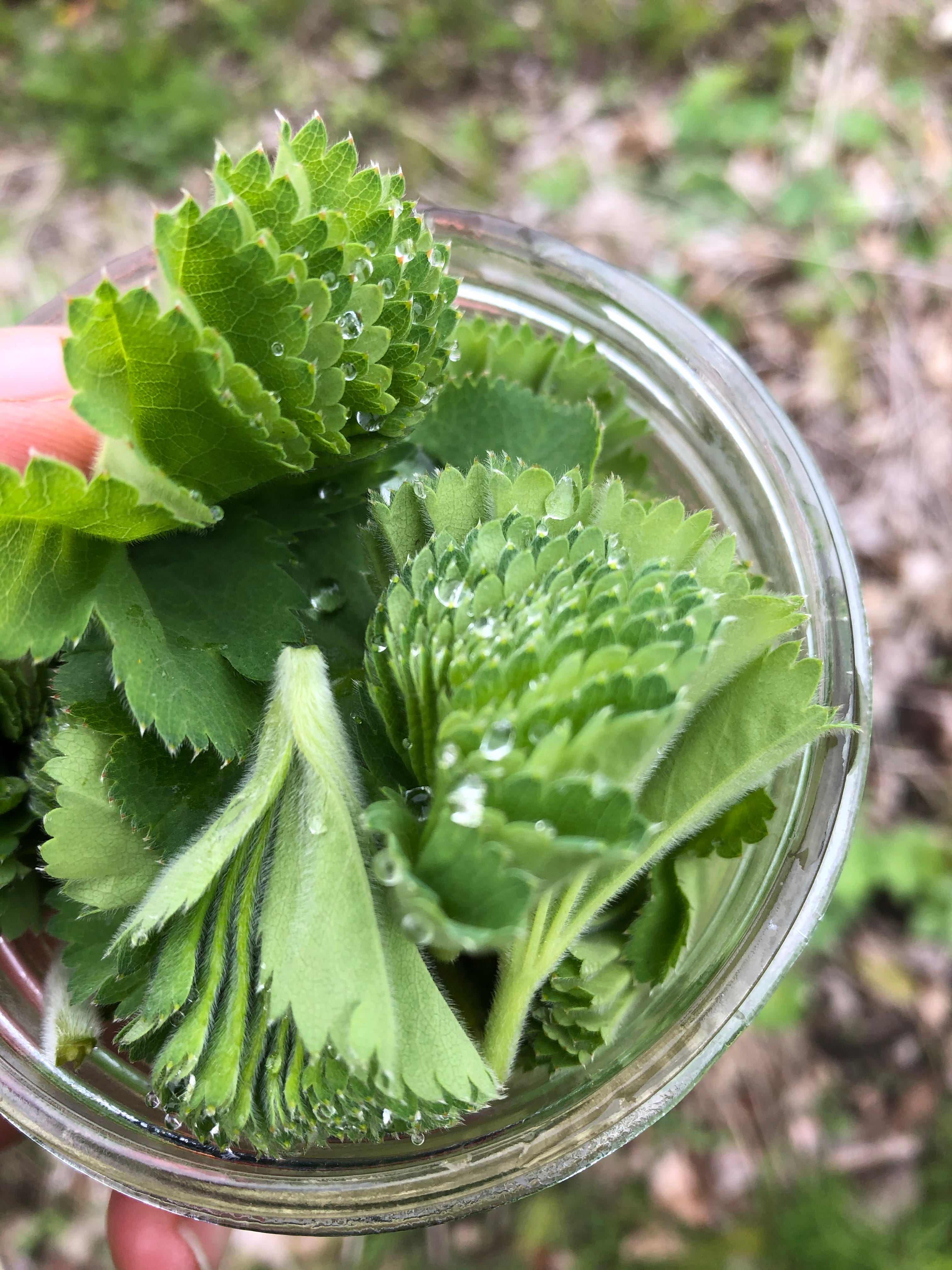
There were three cribs: Daisy, Lily and Rose with the corresponding flowers growing nearby. And flanking all those, was the exceptionally hardy, and yet soft like a lamb’s ear, Lady’s Mantle. The Latin name of the plant shown above is Alchemilla mollis, although in the medicinal use of the plant, you see the species Alchemilla vulgaris used (I’ve read you can use A. mollis similarly).
It’s funny that this was the plant put there, because I don’t think even Charlotte knew how good it was for a woman’s reproductive system—at least that never got into the tour talks! I’m sure it was more for the name itself, Lady’s Mantle, as well as the delightful tale of those hydrophobic dew drops…
It’s said that if you gather morning dewdrops from Lady’s Mantle leaves and gently dab them upon your face, you’ll retain—or obtain—the dewy freshness of a maiden.
Seems like a lovely way to greet the day if you ask me!
Continually:
“The alchemists, to whom the name Alchemilla refers, believed that the dewdrops that gather on the leaves had magical powers to help them in their search for the philosopher’s stone, with which they expected to turn base metals to gold. The name lady’s-mantle refers to the plant’s shapely, pleated leaves, which resemble a medieval lady’s cloak—one suitable for the Virgin Mary, hence the plant’s original common name, Our-Lady’s-mantel. [note because it refers specifically to Mary, it is NOT Ladies Mantle]
Generations of folk healers have prized the plant for its astringent properties. They have used it externally and internally to stop bleeding (including excessive menstruation), to heal wounds, to relieve vomiting, and in a host of other cures. Early herbalists believed that the plant had such strong contractile powers that it could “restore” lost virginity and give new firmness to flabby breasts.”[1]
I almost didn’t include that part because it seemed a little much—but I left in in because it is memorable. And that’s what Plant Stories help us do, remember how a plant may be of service to us when we’re in need! As I read further, I saw more than one mention about this ‘fact'.’ There is a lot of tannin in Lady’s Mantle, which means it’s astringent and can tighten the tissues. It also has an affinity for female reproductive organs.
I’d imagine it would be useful if prolapse were an issue…while seeking other Lady’s Mantle stories, I encountered this from herbalist Deb Soule:
“A tea of lady’s mantle and raspberry leaves taken daily for several weeks is helpful for a prolapsed uterus.” (That and some added feet up rest!). Soule also writes, “Lady’s mantle helps relieve mild aches and pains during the menstrual flow. The tea or tincture helps stop spotting between periods and lessens excessive menstrual bleeding for women of any age. Lady’s mantle is also a supportive friend for women going through menopause. It eases physical and emotional discomforts. Lady’s mantle’s astringent nature is useful for diarrhea and as a mouthwash for sores.”[2]
Lady’s Mantle can be used like Yarrow to slow excessive bleeding and to help with wounds and bruises. The dried herb can be used for diarrhea and dysentery. Rosemary Gladstar writes Lady’s Mantle is “used to promote fertility.”[3] Rosemary shares this in her book, The Family Herbal:
BREAST HEALTH TEA
By Rosemary Gladstar[4]
This mineral-rich tea nourishes the blood and encourages healthy lymphatic flow.
2 parts calendula
2 parts red clover
1 part cleavers
1 part lady’s mantle
Spearmint or Peppermint, optional—for flavor
Prepare as an infusion. Use 1 ounce herb per quart of water, let steep overnight. Drink 3-4 cups daily.
This tea would be something to consider if you’re dealing with lumpy breasts due to inflamed or congested lymph nodes.
Lady’s Mantle is a plant that I like to grow just because she’s beautiful too. She gives me such joy when I spy her folded-fan-like leaves in early Spring. Her chartreuse hue a welcome vibrance to the garden. And those dew-drops, a special treat. Let toddlers drink from the leaves, or gather a few in your morning tea. When preparing your garden for planting Lady’s Mantle, I would recommend making sure the area you’re planting is weed free. Give it a little organic fertilizer and watch it grow!
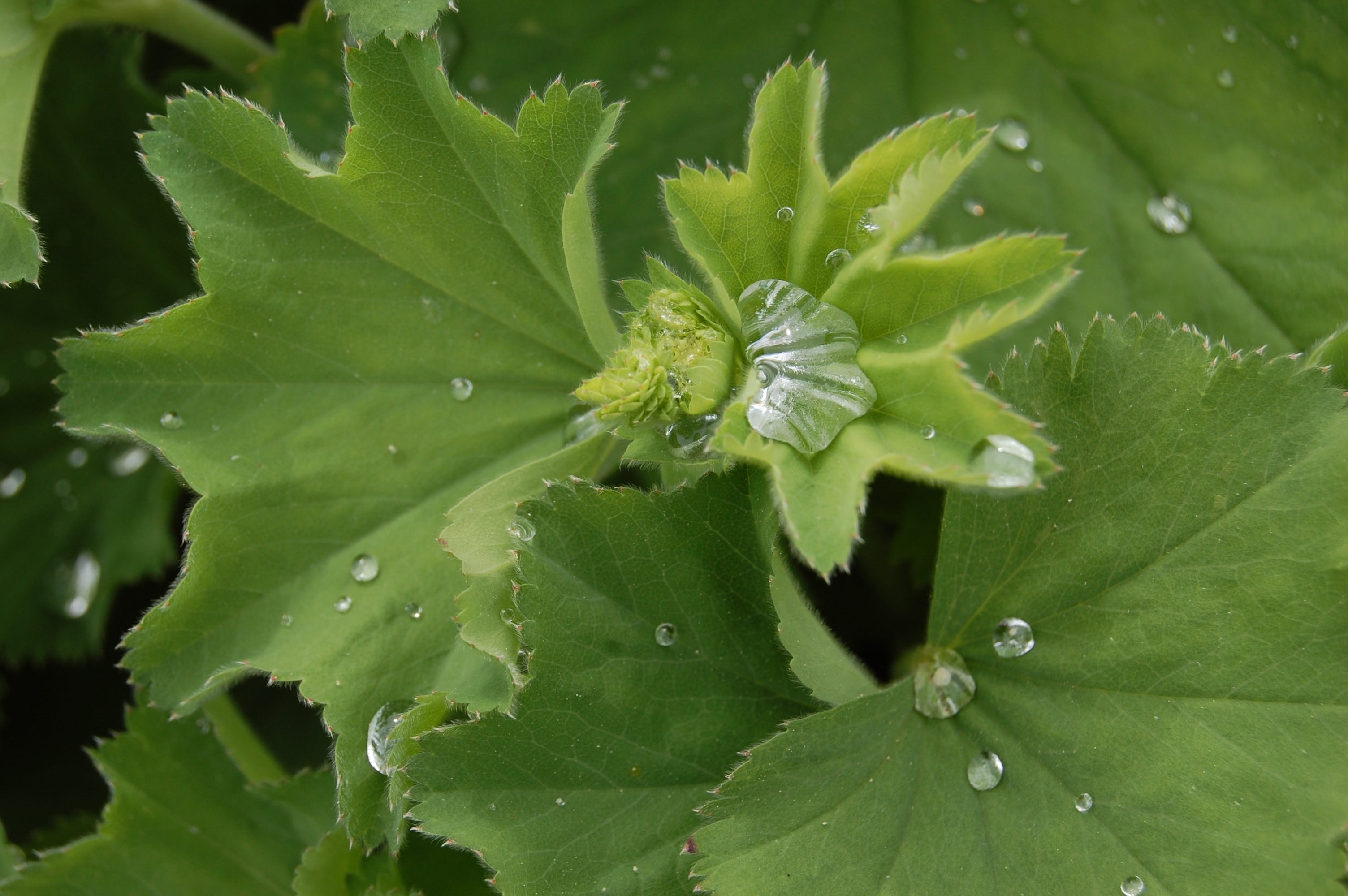
As a perennial, Lady’s Mantle does take a few years to get going from seed. If starting from seed (fairly easy to do), I’d transplant up into larger pots for a year or two and then plant out into the garden. (Being sure to mulch/protect those pots during winter.) Transplant your Lady’s Mantle in the garden once an established start—it grew in full sun in coastal Alaska, here in the high desert Rockies, full sun might be a bit too intense.
I currently grow her in partial sun/mostly shade and she does great. So I think part sun/part shade and you’re good. Maybe morning sun versus evening if you’re in a hot summer place…
The flowers are a bit brighter hue then the leaves and create a great filler in bouquets. Remove spent blooms to encourage more vegetative growth; or leave on for potential volunteer seedlings the following year. Lady’s Mantle is hardy to zone 3.
Recently I purchased some A. vulgaris starts from Strictly Medicinal Seeds — my go-to organic herbal seed/plant company. I’d been growing A. mollis — starts from Jewell Gardens for years. I’m curious if I can discern a difference between the two! I decided to do this because I was looking up herbs for peri-menopause/menopause symptoms, and found a great chapter on Lady’s Mantle in Matthew Wood’s: The Book of Herbal Wisdom. Specifically, I was interested in herbs that helped with fluid retention, something I’ve been dealing with for about year now. Here are some direct quotes from Wood that I found intriguing:
“The leaves are the part used in medicine. They contain bitters, tannins, and salicin. The taste is moderately bitter and astringent, with a warm undertone. The combined bitter/astringent taste reminds one of the aspirin-like salicin compounds which it contains. This component is often found in plants that grow in west places or expel water. The leaves are, as we have noted, water-repellent. These properties point to the use of Lady’s Mantle to dry up and expel water from the tissues, hence its use in stopping hemorrhage, diarrhea, excessive menstruation, leucorrhea [excessive vaginal discharge], and infection….Lady’s Mantle has also been used as a tonic during pregnancy, like Raspberry, but it strengthens tissues by removing excess dampness and inflammation and is not directly nutritive.” (pg. 114) (emphasis mine)
Per Rosemary Gladstar in Herbal Healing for Women:
“Though used for many women’s problems, it is especially valued during pregnancy for toning the uterus. Because of its astringent qualities, it’s helpful in reducing the chances of hemorrhaging during childbirth. Lady’s mantle also helps settle the stomach and is useful in treating morning sickness.” (pg. 176)
Back to Wood…
“It is useful for hollow wounds, ulcers, fistulas, and sores. It is most amazing how Lady’s Mantle can restore the integrity of torn, ruptured, or separated tissues, as seen in hernias or perforated membranes. It not only supports the cohesion of the cell wall, but of the muscle wall and other such structures, at every level of the body.” (pg. 188-189)
The above makes me think of using Lady’s Mantle tea/infusion after a C-section, or appendectomy, or hysterectomy…really, any surgery that cuts through the fascia/muscles of the body…you can use the leaves and make an infused oil. Perhaps this would be useful for after-care on scars and such.
Wood didn’t mention much about the root, but that too can be utilized. More so for it’s styptic (astringent/ability to slow/stop bleeding) qualities. You can harvest the root in Spring or Fall, dry and powder. Use the powder on fast-flowing wounds, or make into a tincture for internal aid.
The leaves are usually harvested for medicine before it flowers, when they are young and tender—so May-June/July depending on location. You could also use the regrowth if you cut the plant back hard after it blooms out ( cut back both flowers & spent leaves).
So to recap, Lady’s Mantle is a good uterine tonic, helpful for wounds and repairing & tightening cellular tissue. It’s a diuretic that can help ease edema. Because of it’s astringent nature, it may help with diarrhea and gastroenteritis. Andrew Chevallier, in The Encyclopedia of Medicinal Plants, even mentioned it used as a liver decongestant and using it to help set bones in small children! (pg. 161)
Sure seems that Lady’s Mantle was a right good choice to plant next to the cribs of ‘Paradise Alley’! Although, on the flip side, Chevallier also mentions that: “When taken regularly for 15 days, lady’s mantle was said to reverse sterility due to “slipperiness” of the womb.”
What a plant!
Now, let it be noted that some sources say it’s great to use during pregnancy, like Matthew Wood, Susun Weed and Rosemary Gladstar. But others, like Thomas Easley/Steven Horne and Andrew Chevallier, say to Avoid during Pregnancy…
Certainly worth looking into more if you have a history of miscarriages — this may be incredibly helpful in tightening the uterus and preparing for birth, or it may not. Personally, I’m more of the it’s okay during pregnancy side, but it really is up to you if you choose to go deeper with this particular plant medicine for that purpose.
As far as dosages are concerned, that too is widely variable. For a medicinal infusion, the standard is: 1 oz dried herb to 1 quart water — steep 8 hours/overnight. Strain, and drink 4-8 oz 3 times per day (per Horne/Easley).
Now that is A LOT of herb. And it’ll probably taste pretty awful. But if you’re looking for some serious help internally, maybe after a surgery, this may be very beneficial. Because of the tannin content, it may also increase the chances of constipation if taken over a long period of time. Best to give yourself a break now and again and see how your body responds.
I do believe that one can receive benefit from even a few leaves in their evening herbal tea, so play around with that if you’ve only got a singleton plant to start with.
As for tincture doses…
Wood suggests only using one-three drops as a dose. Doesn’t mention how many times per day, or for how long. Personally, that seems a bit low, but it is a good starting point.
In The Modern Herbal Dispensatory, Easley and Horne suggest 5 drops to 3 mL (.6 tsp.) 3 times per day (using a dried leaf tincture, 1:5 in 50% alcohol).
One could also make a fresh leaf tincture using the folk method for personal use. (If you’d like to read a little more about tinctures, I’ll be posting a “how-to” soon; here’s a little missive from last year:

Okay, I that’s a wrap for this essay. I do hope you enjoyed reading and gained some insight into a beautiful medicinal and hardy garden plant that really does contain magical properties!
Thanks for being here,
Emily
[1] Magic and Medicine of Plants, Readers Digest; pg. 230
[2] The Roots of healing: A Woman’s Book of herbs, by Deb Soule, 1995 pg. 118
[3] Family Herbal by Rosemary Gladstar, pg 204
[4] Family Herbal, pg. 208
Great to see you here again and a beautiful essay to ponder on a very hot, July day (Southern California)!
Great post, Emily! I just planted Lady's Mantle in my newbie plant bed this year and she got pretty crowded out, so I will try to protect her over the winter and give her more space next year.
I have been working with the tincture for my varicose veins (plus Horse Chestnut or White Oak) and it's been helpful. My uterus was neglected after the 3 kids so I am sure is also benefiting!